Family Court Insights for Litigants in Person
Practical, plain-English articles to help you navigate the UK family court system with confidence. Whether you are dealing with child arrangements, financial remedy, non-molestation orders, or looking for a McKenzie Friend — our blog breaks down the reality of family court in language you can actually understand.
Every article is written from the perspective of people who have been through the system — litigants in person and McKenzie Friends who understand the gaps between what you assume and what actually happens. We do not give legal advice. We share observational insights so you can walk into court informed, prepared, and in control.

Fact-Finding Hearings: What Litigants in Person Should Understand
Fact-finding hearings are stressful, and outcomes are often mixed. Here are the principles that shape what a court accepts, and what it does not.

The Express Financial Remedy Pilot: Is Your Case Inside It?
PD36ZH runs an express financial remedy pilot in 34 court locations until 2 April 2027. What it covers, how the timetable works, and what a respondent can do if they think the case does not belong in it.

Family Procedure Rules Updates 2026: What Has Changed and When
A plain-words summary of the 2026 Family Procedure Rules and Practice Direction updates, including regulated experts, police notification, and extended pilot schemes.

PD36ZI: Police Notification of Some Non-Molestation Orders Extended to July 2027
Practice Direction Update No.4 of 2026 extends a pilot scheme under which HMCTS can share some Non-Molestation Orders with the police until 13 July 2027.

Parenting Plans: What They Are and Why Litigants in Person Should Know About Them
A parenting plan can make day-to-day life easier after separation. Here is what it is, what it is not, and how it fits into a court process in England and Wales.

McKenzie Friend Support in Complex Children's Proceedings: A Judgment Case Study
A real judgment shows what McKenzie Friend support looks like in a high-stakes child arrangements hearing with domestic abuse findings. How a litigant in person was heard fairly.

What Is Arbitration in Family Cases? A Plain-English Guide
Arbitration is a private way of resolving a dispute where an independent person makes a binding decision. Here is what the word means, how it differs from court, and what litigants in person often wonder about it.

How to Prepare for a MIAM
A MIAM is a short meeting with a mediator, and in most family court applications you need to attend one first. Here is who has to go, what it costs and what to do beforehand.

What Is an Affidavit? Meaning and What People Notice in Family Cases
An affidavit is a written statement of facts that you swear is true. Here is the affidavit meaning in plain English, how it differs from a witness statement, and what an affidavit of means is.

C1A Form Explained: What It Is and Why It Is Used in Family Court
The C1A form is used to raise concerns about abuse or harm in children cases. Here is a plain-English guide to what it is, who uses it, and how it relates to the C100.

What Is a Barder Event? The Barder Principle Explained Simply
A Barder event is a major, unforeseen change after a financial order is made that may allow someone to ask the court to look at it again. Here is the Barder principle in plain English.

Attachment of Earnings Order: What It Means in Plain English
An attachment of earnings order is a court order that tells an employer to take money from wages to pay a debt or maintenance. Here is what it means and what people commonly ask.

Adjourned Meaning in Court: What Happens When a Hearing Is Adjourned?
Adjourned simply means a hearing has been paused and will continue at a later time. Here is what adjournment means in court, why it happens, and what litigants often do next.

Getting Help Before Court: What You Need to Know About Family Help
A new, free way to get whole-family support designed to keep families together and avoid court altogether.

When the Courts Are Full and Legal Aid Runs Out: Why Independent McKenzie Friends Matter
With nearly half of family court cases involving unrepresented litigants, and family court caseloads rising 3% in 2025, independent McKenzie Friends are filling a critical access-to-justice gap. Here's what's happening and why it matters.

How Long Does a Child Arrangements Case Take in 2026? The Standard Route and the Child Focused Court
Two different procedures now run side by side in England and Wales, and which one you are in makes a big difference to how long your case takes. Here are the timelines for both, the courts covered, and how to avoid adding delay.

The Court of Appeal's First Ruling on the Child Focused Court: What Has Changed and What Hasn't
The Court of Appeal has given its first judgment on a case decided under the Child Focused Court model. The message is clear: the procedure has changed, the law has not. Here is what that means if you are representing yourself.

The Way You Speak to Professionals Is Evidence
A father won a path to unsupervised contact, then lost it on appeal. His conduct towards solicitors, contact centre staff and the court after the abuse findings was central. Here is what litigants in person can learn.

The Cafcass Report Said Shared Care. The Judge Said Relocation.
Cafcass recommended shared care, but the judge allowed one parent to relocate with the child. Here is why, and what it teaches litigants in person about how the court weighs evidence and conduct.

Why Facebook Is the Wrong Place for Your Family Court Fight
Posting about the other parent or your children on Facebook can break court privacy rules, damage your case and expose you to legal action. Here is why, and what to do instead.

When Saying the Right Things Is Not Enough: Domestic Abuse, Coercive Control and Child Arrangements in the Family Court
A Family Court judgment highlights how courts assess coercive control, domestic abuse, behavioural change and child arrangements. Learn why accepting findings and attending programmes may not be enough to demonstrate genuine change.

When a Domestic Abuse Course Is Not Enough: Lessons from a Recent Family Court Judgment
A father completed a lengthy domestic abuse course, but the court said it did not meet the Cafcass recommendation. Here is why, and what it means if you are facing child arrangements proceedings after findings of abuse.

Domestic Abuse Protection Orders (DAPOs): What They Are, and Why You Might Not Be Able to Get One Yet
DAPOs are being talked about as the future of protection from domestic abuse, combining the powers of a non-molestation order and an occupation order in one. Here is what one actually is, and why it might not be available where you live.

Freezing Orders in Divorce: What to Do If You Think Your Spouse Is Moving Money
If your spouse is moving money, selling assets or transferring property during your divorce, the family court can step in, but only on solid evidence and with real risks for the person applying. Here is what the court can do, what it needs to see, and the cheaper alternatives.

What Is a Questionnaire in Financial Remedy Proceedings?
If you've exchanged Form E and been told to prepare a 'questionnaire', here's what it actually is, what the rules require, and how to avoid the mistakes that get requests struck out at the First Appointment.

Is It Right That a Spouse Who Contributed Nothing Should Get Half?
It feels unfair on paper, but the law treats marriage as a partnership. Here's where the 50/50 starting point actually comes from, and the specific situations where courts move away from it.

Private FDR: What People Assume vs What Actually Happens
Private FDR comes up a lot in financial remedy cases, and a lot of what people assume about it doesn't hold up. Here's where the assumption and the reality actually diverge.

AI and Your Court Documents: The Assumption vs the Reality
Many litigants in person assume that if AI drafted it, someone else will catch the mistakes. A recent tribunal ruling shows that assumption is wrong, and the cost of getting it wrong falls on you.

Child-Focused Courts Are Coming: What Litigants in Person Need to Know Now
Family courts across England and Wales are rolling out a new "child-focused" model. Here's what's actually changing, why it matters if you're representing yourself, and where to get support.

Has He Really Changed? What Judges Look For
A recent family court judgment weighed whether a father found to have abused his children's mother had genuinely changed, or just learned what to say. Here's the pattern the judge saw through.

Why You Should Always Take Notes at a Hearing
A High Court case shows why a contemporaneous record of what happens in a hearing, especially what a judge says or doesn't say, can matter more than you'd think if you ever need to appeal.

When the Court Believes You, But Still Can't Help
A mother proved, in court, that she'd suffered serious abuse, including a partner cancelling her passport and renouncing her citizenship to trap her abroad. She still lost her case to bring her children home. Here's why jurisdiction can trump everything else.

What Judges Are Really Saying About Conflict In Front Of Your Child
A recent family court judgment shows that it isn't the big allegations that harm a child, it's the drip feed of everyday tension. Here's what the court actually said, and what it ordered both parents to do about it.

When "I was worried about my child" isn't a defence: breaching contact orders and coercive control
A recent published family court judgment shows how repeated breach of a child arrangements order can amount to coercive and controlling behaviour, even where the parent believed they had good reason. Here's what it means for litigants in person.

What Are The Risks Of Agreeing To Ongoing Spousal Maintenance?
Ongoing spousal maintenance can offer real protection, but it also leaves both people financially tied together for years. Here is what can change, and what to consider before agreeing.

My Ex Has Applied for Maintenance Pending Suit, What Happens Now?
If you have been served with a Maintenance Pending Suit application, here is what it actually means, what the court looks at, and what it does not decide.

Being Named on a Birth Certificate Does Not Automatically Give You Parental Responsibility
A family court judgment this year confirms that registration as a parent on a birth certificate does not, by itself, create parental responsibility for a non-biological same-sex partner unless the child was conceived through a recognised assisted reproduction process.

Hidden Income in Divorce: What Happens When Your Ex Won't Disclose the Truth
HJ v QY [2026] EWFC 245 (B) shows exactly what UK family courts do when one party hides income and assets during financial remedy proceedings, and what litigants in person can learn from it.

What Actually Happens at a Fact-Finding Hearing? A Real Case Explains It
A recently published family court judgment shows exactly how a fact-finding hearing works in practice, from how allegations get narrowed down to how the court weighs evidence and what happens after findings are made.

The Presumption of Parental Involvement Is Set to Be Repealed. Here's What That Means for Your Case.
The government is repealing the presumption that both parents should be involved in a child's life. Here's what the change means, why it's happening, and what critics say about parents being shut out.

Financial Remedy Conduct Allegations: Why Gray v Gray Cost One Litigant 75% of the Costs
In Gray v Gray [2023] EWFC 349 (B), a self-represented husband lost his conduct case entirely and was ordered to pay 75% of his wife's legal costs. Here is what the judgment means for anyone representing themselves in financial remedy proceedings.

When the Legal System Leaves You Stranded: How to Bridge the Gap in Family Court
Legal aid withdrawn? Solicitor come off the record? You are not alone — and you are not without options. Family Court Bridge connects self-represented litigants with the support they need to keep going.
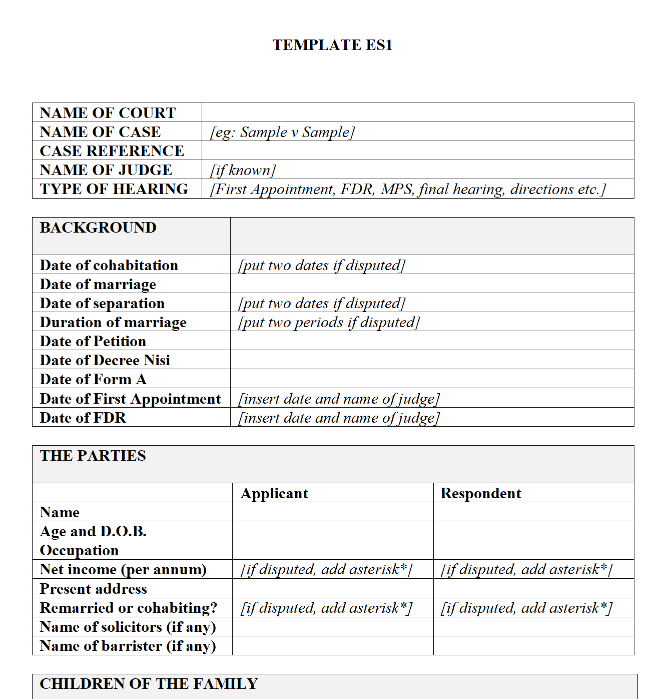
Form ES1 Explained: The Composite Case Summary in Financial Remedy Proceedings
A plain-English guide to Form ES1 — the Financial Remedies Court's composite case summary. Learn what it is, when you must file it, what goes inside, and how a litigant in person can get it right without a solicitor.
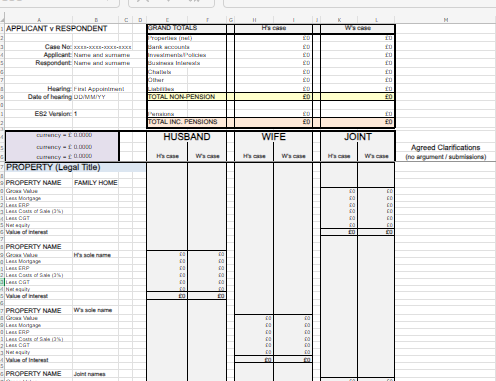
Form ES2 Explained: The Composite Asset & Income Schedule
A plain-English guide to Form ES2 — the Financial Remedies Court's composite asset and income schedule. Learn what it is, when to file it, how the Excel template works, and how a litigant in person can complete it accurately.

The McKenzie Friend Niche: Why This Small Profession Matters in Family Court
McKenzie Friends are one of the most niche, least-known professions in the UK legal system — yet they fill a gap that solicitors, legal aid, and free services cannot. Here is why this niche matters.

How to Prepare for Your First Family Court Hearing as a Litigant in Person
Your first family court hearing can be daunting. Here is what to expect, what to bring, and how to present yourself as a self-represented litigant in the UK.

Understanding Financial Remedy: How the Court Divides Assets on Divorce
Financial remedy proceedings determine how assets, pensions, and income are divided on divorce. Here is what every litigant in person needs to know.

C100 Application: A Complete Guide to Child Arrangements Orders
The C100 is the form you need to apply for a child arrangements order. Here is what it asks, how to complete it, and what happens next.

What You Think Is Happening vs What's Actually Happening
The gap between what litigants in person expect from their case and what actually happens in the family court system, and why closing that gap matters.

Breach, Enforcement and Orders: Four Things People Get Wrong
Non-molestation orders, prohibited steps orders and penal notices get mixed up often in online advice. Here's what actually enforces what, and why it matters.

Re C: What the First Child Focused Court Appeal Means for You
The first Court of Appeal decision on the Child Focused Court model and domestic abuse clarifies what victim-survivors need to know about how abuse is treated in the new streamlined courts.

Can You Get Divorced Without a Solicitor? Work Out What You Actually Need
A self-assessment tool to work out whether you can handle divorce alone, where you're at risk, and what kind of support actually helps. With questions to answer honestly about your situation.
Family Court — Common Questions
The questions litigants in person ask most, answered in plain English.
What is a litigant in person in UK family court?
A litigant in person is someone who represents themselves in family court proceedings without a solicitor. They are fully responsible for preparing their case, filing court forms, serving documents on the other party, and presenting their evidence at hearings. Bridge The Gap provides observational insights and plain-English guidance to help litigants in person understand the process.
How can a McKenzie Friend help in family court?
A McKenzie Friend is a lay supporter who can sit beside you in court, take notes, help organise your evidence, and provide moral support and procedural guidance. They cannot give legal advice or conduct litigation on your behalf. Our McKenzie Friend directory connects litigants with vetted support professionals across the UK.
What forms do I need for family court?
The forms you need depend on your case type. Financial remedy cases start with Form A and require Form E for disclosure. Child arrangements cases use the C100 application and C7 response. Non-molestation and occupation orders use FL401. Our Your Journey feature maps every form to the correct stage of each case type.
Do I need a MIAM before going to family court?
Most family court applications require you to attend a MIAM (Mediation Information and Assessment Meeting) first. You may be exempt if there is domestic abuse, urgency, or other qualifying factors. The mediator signs Form FM1 to confirm you attended or are exempt.
What is the difference between a non-molestation order and an occupation order?
A non-molestation order prevents someone from harassing, threatening, or being violent towards you. An occupation order regulates who can live in the family home. Both are applied for using Form FL401 under the Family Law Act 1996.
Knowledge is Power
You are fully responsible for your own case. Never hand your life over to anyone without a full understanding of what is happening and why — Bridge The Gap exists so you always know enough to stay in control.